DiagHub Online Academic Platform
The eighth session on Molecular Concludes Successfully – Highlights Recap
Nov 28, 2025 Zybio News
The eighth session of DiagHub centered on molecular diagnostics, bringing together global experts to explore both laboratory challenges and technological advances in molecular testing. Moderated by Dr. Sonja Šuput from Serbia, the session included two keynote presentations: Dr. Ekawat Pasomsub from Thailand, who discussed molecular workflow optimization for resource-limited settings, and Ms. XiaoHong Yu, Product Manager at Zybio Inc., China, who presented on "Technological Innovations Propelling Molecular Diagnostic Development."
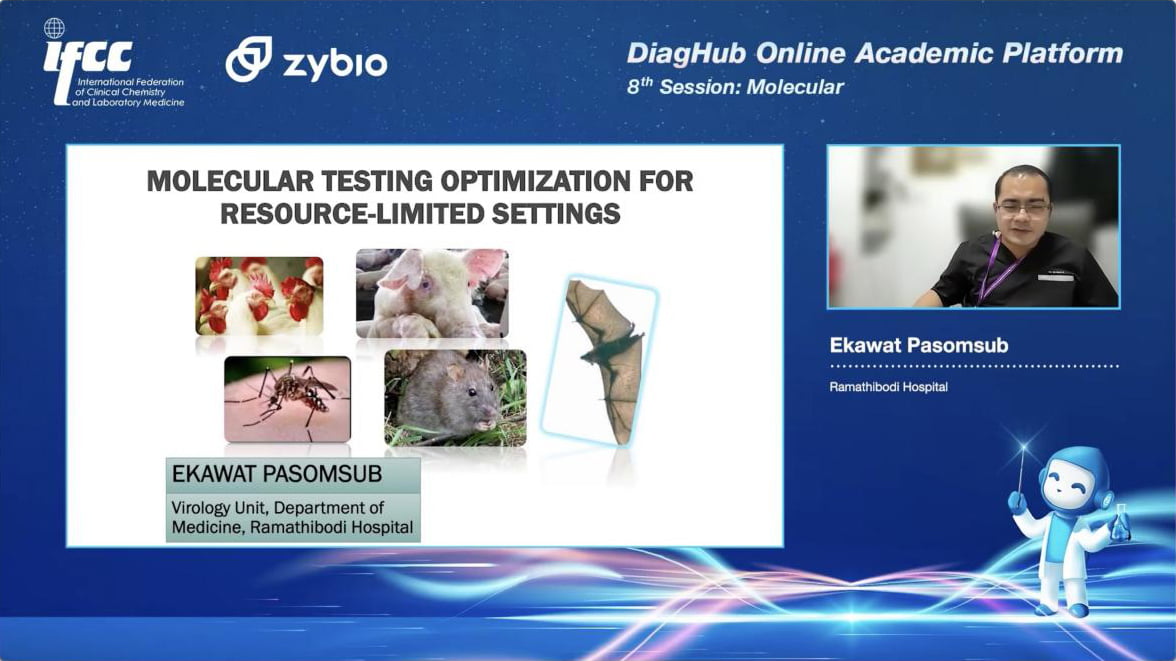
Based on the presentation by Dr. Ekawat Pasomsub, the session provided a comprehensive overview of the critical challenges and innovative strategies for optimizing molecular testing in resource-limited settings. Dr. Pasomsub highlighted the significant barriers faced by such environments, including limited laboratory infrastructure, high costs of assays and consumables, shortages of trained personnel, and supply chain instabilities, using the COVID-19 pandemic as a key example.
He detailed several practical optimization strategies. This included the validation and use of alternative sample types like saliva for SARS-CoV-2 testing to simplify collection, the adoption of extraction-free or direct PCR protocols to save time and reagents, and the implementation of innovative techniques like LAMP-PCR for faster, equipment-light amplification. Furthermore, he emphasized the utility of multiplex PCR panels for syndromic testing to maximize information from a single test and the potential of newer technologies like digital PCR and next-generation sequencing, albeit with considerations for cost and complexity.
A major focus was on the concept of diagnostic stewardship. Dr. Pasomsub presented a successful intervention from his hospital involving an electronic pop-up reminder system that significantly reduced the rate of unnecessarily frequent CMV viral load testing, leading to substantial cost savings without compromising patient outcomes. This underscored the importance of rational test utilization.
In conclusion, Dr. Pasomsub's presentation outlined a clear path forward, advocating for the selection of cost-effective, robust, and easy-to-use technologies, workflow simplification and automation, continuous training, and, crucially, the implementation of diagnostic stewardship programs to ensure the sustainability and efficiency of molecular diagnostics in resource-constrained environments.
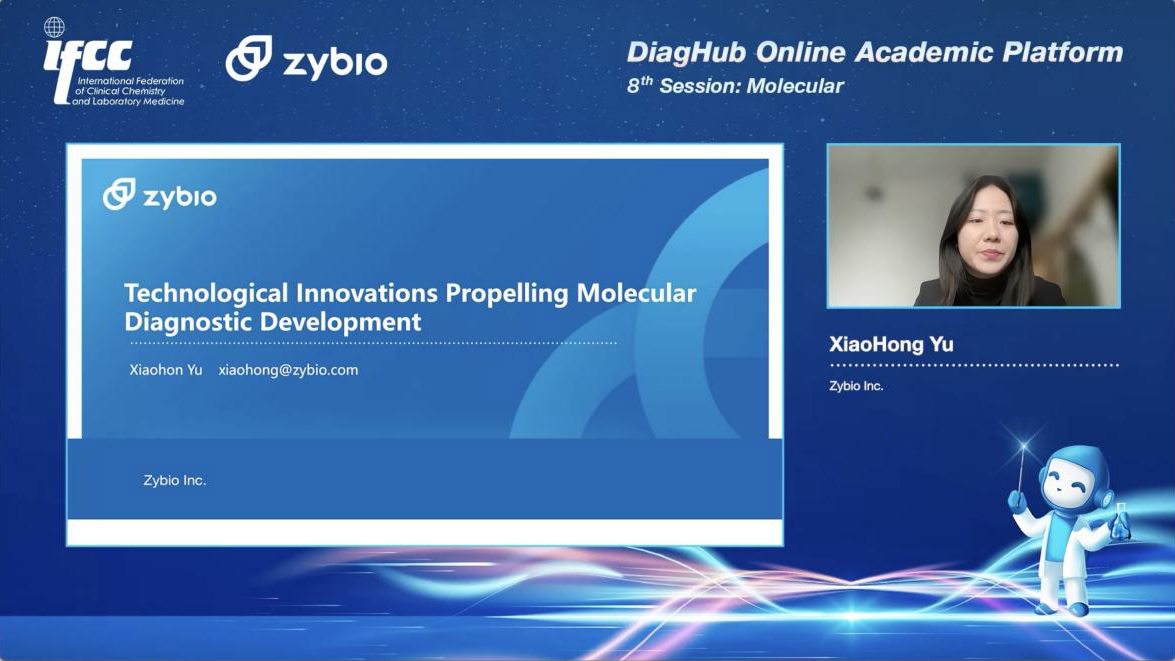
This presentation outlines key technological advancements in molecular diagnostics, focusing on fluorescence PCR, and positions them within the evolution of medicine towards precision healthcare. It emphasizes that precision diagnosis is the fundamental prerequisite for precision treatment.
The discussion details innovations addressing major pain points in traditional qPCR: inefficiency, contamination, and inhibitor interference. In nucleic acid extraction, Zybio's automated magnetic bead-based systems enhance speed, throughput, and safety by eliminating toxic reagents. Critical optimizations in magnetic bead dosage and surface modification ensure high nucleic acid purity and yield, directly impacting downstream amplification efficiency. Furthermore, specially formulated extraction reagents effectively remove a broad spectrum of inhibitors, preventing false negatives.
For contamination control, a dual strategy is employed: The UNG-dUTP system enzymatically degrades carryover amplicons, and a temperature-sensitive separation gel physically seals reaction tubes, preventing aerosol leakage post-amplification. Sensitivity is ensured by targeting conserved pathogen sequences, achieving low detection limits.
Efficiency is drastically improved through automation and an innovative "Three-Temperature Zone" PCR instrument design that reduces amplification time. Usability is enhanced via "all-in-one-tube" detection kits, minimizing manual pipetting and error.
These technological upgrades—spanning accuracy, efficiency, and convenience—are integrated into Zybio's full-process solution portfolio for clinical and non-clinical applications. The robustness of these innovations is validated by international peer recognition, with multi-center clinical trial data presented at premier conferences (ADLM, ESCMID) and published in high-impact journals like Clinical Chemistry.
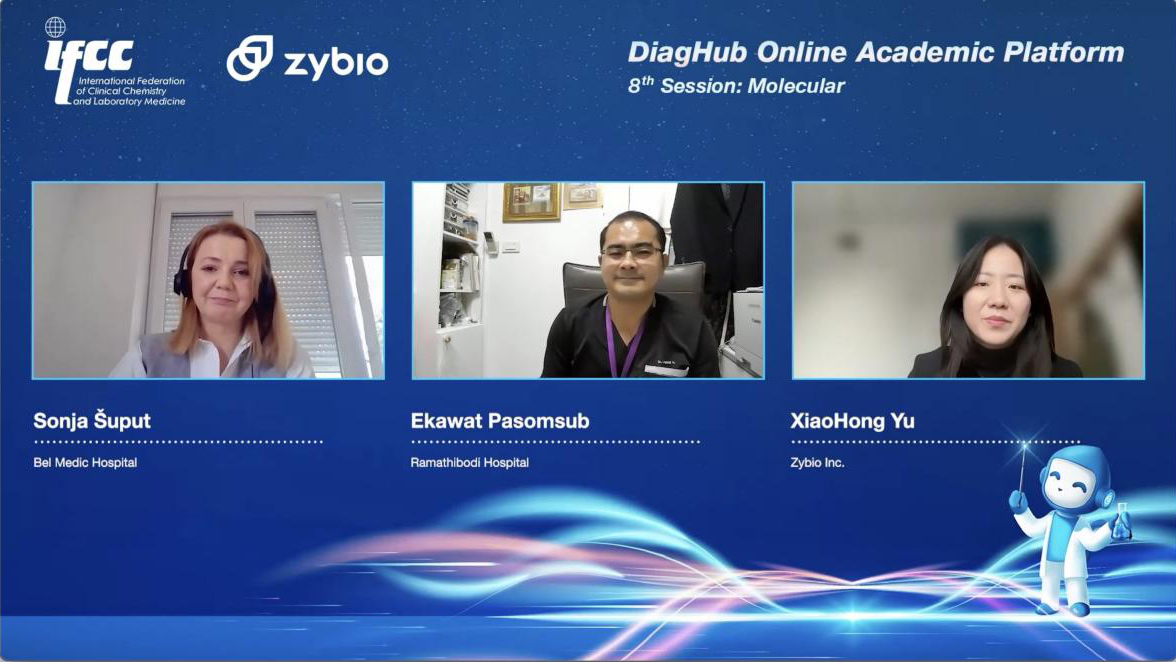
The session concluded with a dynamic Q&A segment where the speakers addressed audience inquiries. Dr. Ekawat Pasomsub identified other molecular testing areas, such as respiratory virus panels and STI testing, that are prone to overuse and discussed the challenges of scaling diagnostic stewardship, including physician ordering habits and cost-benefit analysis. Meanwhile, Ms. XiaoHong Yu elaborated on the key benefits of Zybio's integrated portfolio, highlighting its streamlined workflow and consistent performance advantages for both clinical laboratories and diverse research applications.
The discussions offered practical pathways for advancing molecular diagnostics, underscoring how integrated solutions are pivotal for enabling precision medicine. We encourage your continued participation in the DiagHub series as we work to fuse cutting-edge technology with global insights, pushing the boundaries of what's possible in laboratory science.