DiagHub Online Academic Platform
The ninth session on Microbiology Concludes Successfully – Highlights Recap
December 26, 2025 Zybio News
This ninth session of the DiagHub webinar, moderated by Dr. Ghufran Marashdeh from Jordan—a leader in molecular diagnostics—featured two key presentations on advanced pathogen identification. Dr. Luh Inta Prilandari from Prof IGNG Ngoerah Public General Hospital in Indonesia presented on the "Implementation of MALDI-TOF in Clinical Settings," sharing practical insights into integrating this technology into routine microbiology workflows. Mr. Cary Chen from Zybio Inc. in China followed with a talk titled "The Fungal Priority Pathogens and Advanced Identification Method," focusing on the challenges and solutions in fungal detection using MALDI-TOF MS. Together, their talks highlighted cutting-edge approaches to improving diagnostic accuracy and efficiency in clinical laboratories.
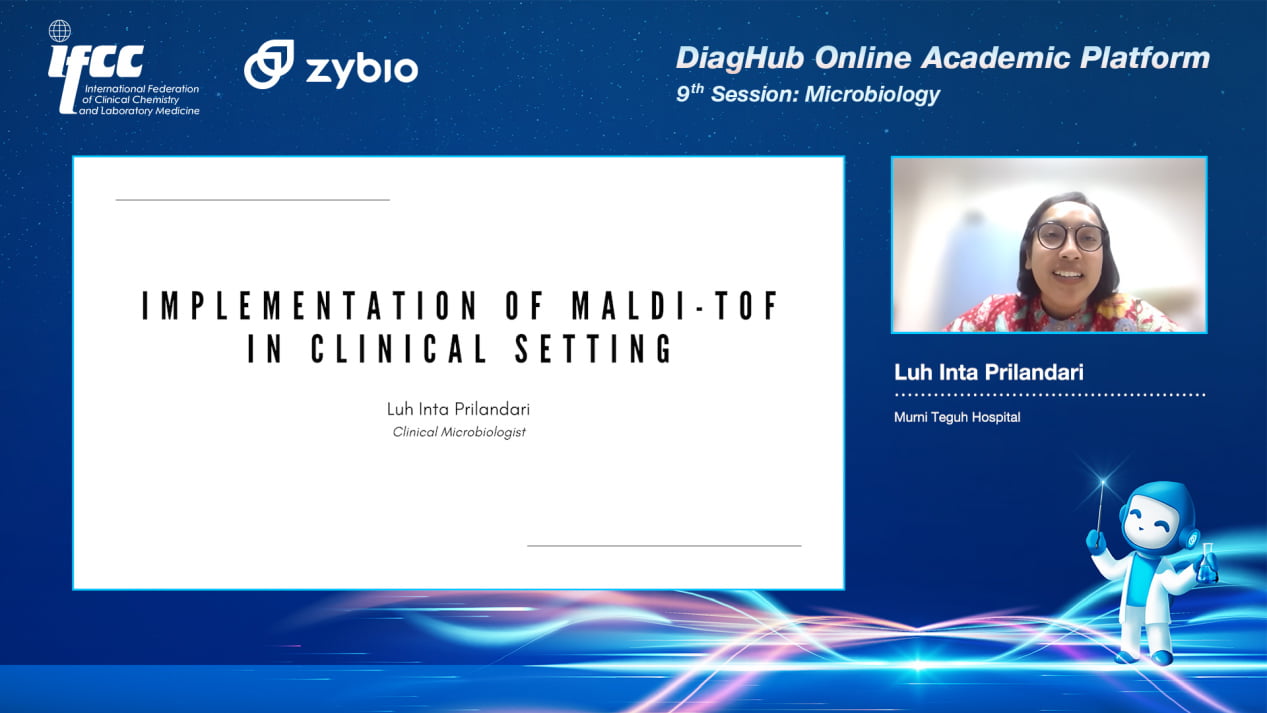
Dr. Luh Inta Prilandari presented on implementing MALDI-TOF MS in clinical microbiology. She emphasized its role in addressing infectious diseases, a leading global health burden.
The talk marked a shift from slow, traditional culture-based methods to the rapid, proteomic-based MALDI-TOF MS technology. Dr. Inta explained its principle: identifying microorganisms by analyzing the mass spectra of their ribosomal proteins. The process involves preparing a sample on a target plate, ionizing it with a laser, and comparing the resulting spectrum to a database for a confident identification.
Key advantages highlighted were its speed, high accuracy, lower consumable costs, and ability to identify bacteria, fungi, and mycobacteria directly from positive blood cultures.
Sharing experiences from a tertiary hospital, she demonstrated how MALDI-TOF MS improved the identification of challenging organisms like Gram-positive rods, molds, and fastidious bacteria. Case studies showcased its critical role in outbreak management, such as rapidly identifying uncommon Candida species in an NICU and molds like Aspergillus fumigatus.
While acknowledging challenges like high initial cost and training needs, Dr. Inta concluded that MALDI-TOF MS represents a paradigm shift. It drastically reduces diagnostic turnaround time, supports antimicrobial stewardship, and improves patient outcomes through precise and timely pathogen identification.
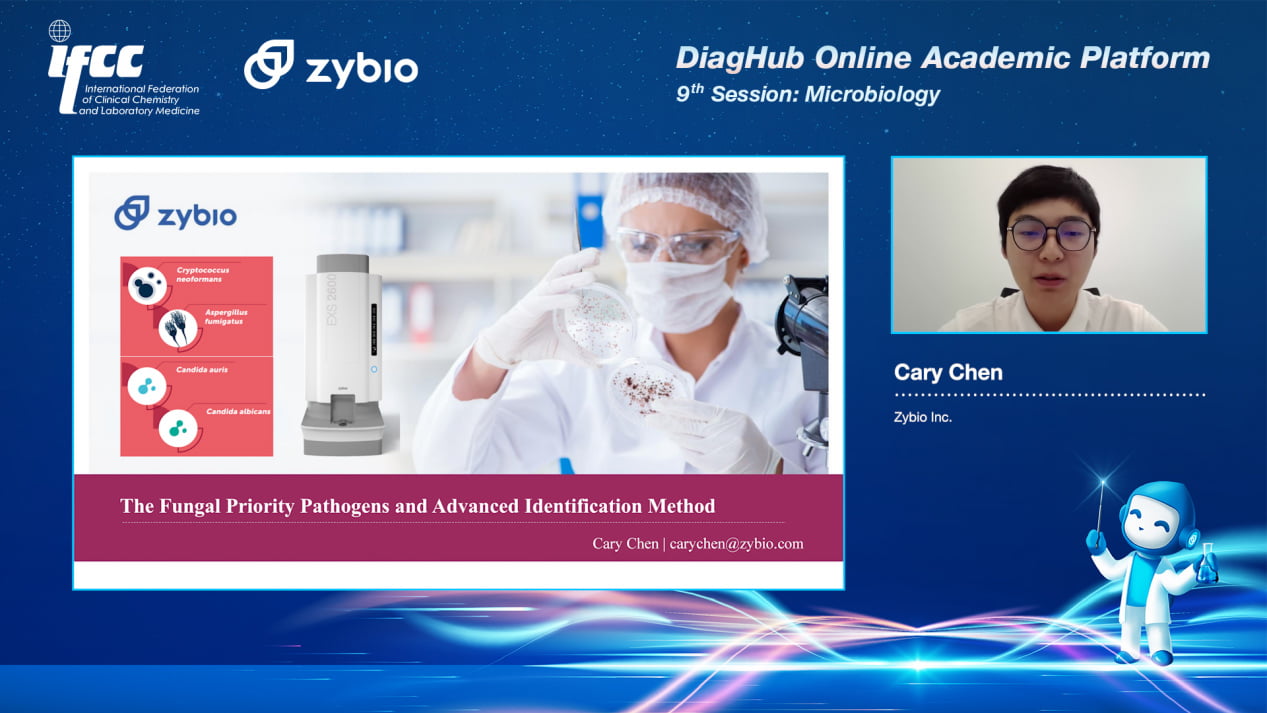
Mr. Cary Chen delivered a presentation on fungal priority pathogens and advanced identification methods. He began by highlighting the severe global burden of fungal diseases, affecting over a billion people and causing 1.5-2.5 million annual deaths—a mortality scale comparable to tuberculosis and malaria.
He introduced the WHO Fungal Priority Pathogens List, which categorizes critical, high, and medium-priority fungi to guide public health action. Mr. Chen then outlined the significant limitations of traditional fungal identification methods, such as direct microscopy and immunological tests.
The core of his presentation focused on the application and challenges of MALDI-TOF MS for fungal identification. He explained that the rigid and complex cell wall of fungi, along with complicated peptide mass fingerprints and pigment interference, make fungal identification more difficult than bacterial identification, especially for filamentous fungi.
To address these challenges, Mr. Chen detailed Zybio's specialized approach. This includes optimized pre-processing techniques and a dedicated spectral library development protocol for molds, which involves collecting spectra at multiple growth stages and using specific extraction methods. He specifically showcased the EXS2600 Mass Spectrometry system and a dedicated mold sample pretreatment kit designed to inactivate, lyse, and extract proteins from filamentous fungi within two minutes, significantly improving identification reproducibility and accuracy.
In conclusion, he presented validation data showing high genus and species identification rates for filamentous fungi, positioning this integrated solution as a powerful tool for precise fungal diagnosis.
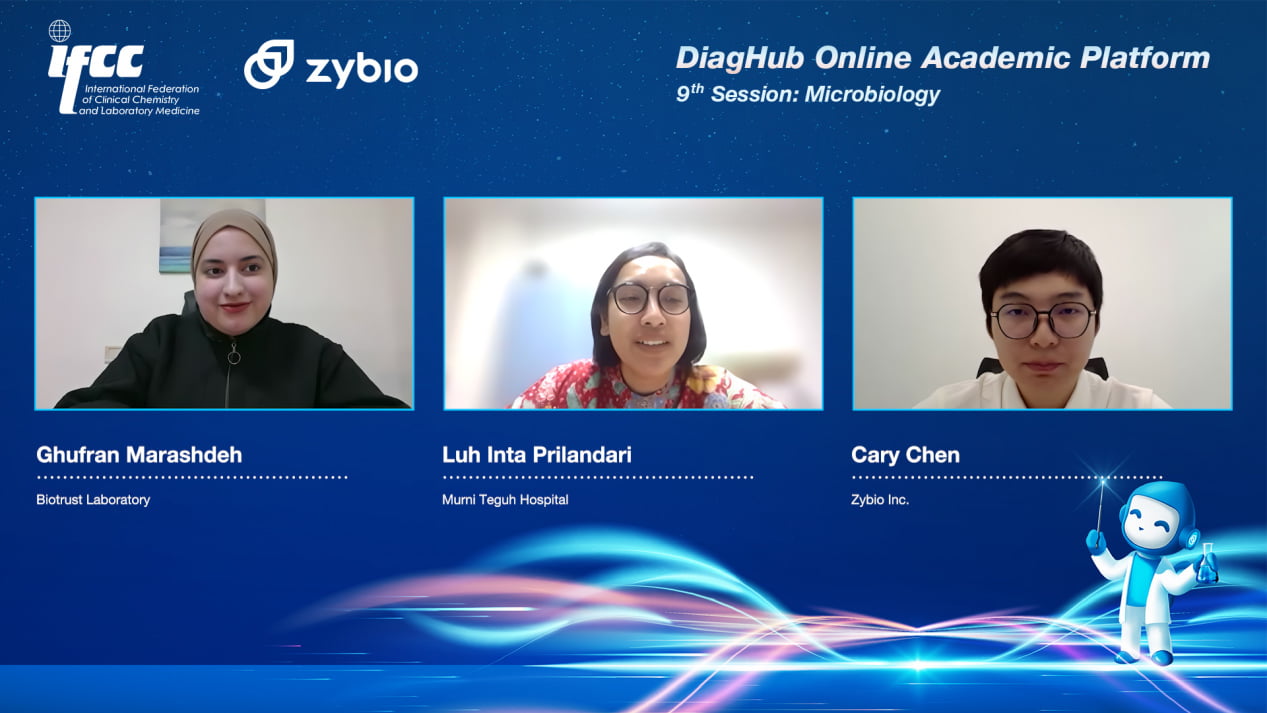
Dr. Ghufran Marashdeh, acilitated a Q&A session following the presentations. Dr. Luh Inta Prilandari addressed questions regarding the integration of traditional methods with MALDI-TOF MS and the resolution of discordant results. Mr. Cary Chen responded to inquiries about the capability of MALDI-TOF MS in distinguishing clinically challenging species complexes. Both speakers provided detailed explanations that highlighted the complementary roles of advanced and conventional techniques in modern clinical microbiology.
With the successful conclusion of this ninth and final session, the DiagHub webinar series has now come to a close. We extend our sincere gratitude to all the distinguished experts who generously shared their insights, and to every attendee whose participation made this series meaningful. As we look ahead, we remain committed to advancing diagnostic science and fostering professional exchange that ultimately enhances patient care globally. Together, let us continue striving toward a future where diagnostics is ever more accurate, timely, and impactful.